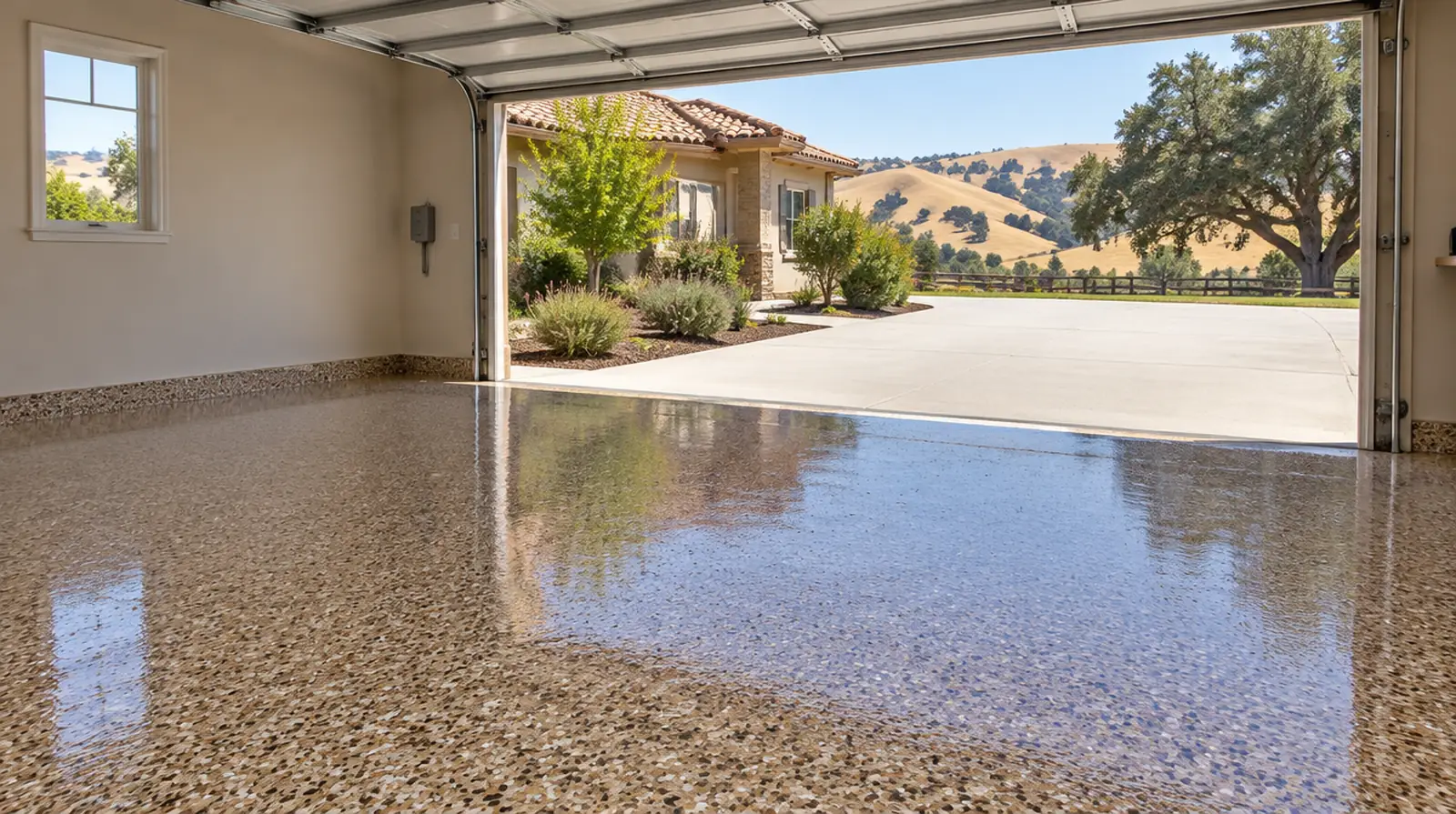
Why flake works so well here
During the dry season the wind carries fine dust in from the fields and the hills. Every time the garage door goes up, a little more blows in. On a solid-color floor, that dust shows up right away. On a flake floor, it nearly disappears into the pattern. The same goes for footprints, tire marks and the light layer of dirt that comes off a mower or a pair of boots.
Flake floors also give you better footing. The chips create a slight texture under the clear topcoat, so the floor is less slick when wet, and the topcoat can be adjusted for more or less grip.
What full broadcast means
Some installers sprinkle a light dusting of chips over a painted floor. That looks fine at first, but the paint layer between the chips is thin and wears through. We do a full broadcast. After the slab is ground and repaired, we roll on a thick base coat and throw vinyl chips into it until no wet resin is left showing. Once it cures, we scrape and vacuum off the loose chips, which leaves a dense, even layer locked in place. Then we seal it with one or two clear topcoats.
- Grind and vacuum the slab.
- Fill cracks and spalls.
- Roll the pigmented base coat.
- Broadcast flake to full coverage.
- Scrape, sweep and vacuum loose chips.
- Apply the clear topcoat with grip.
The result is thicker and far tougher than a painted floor with a few chips on top.
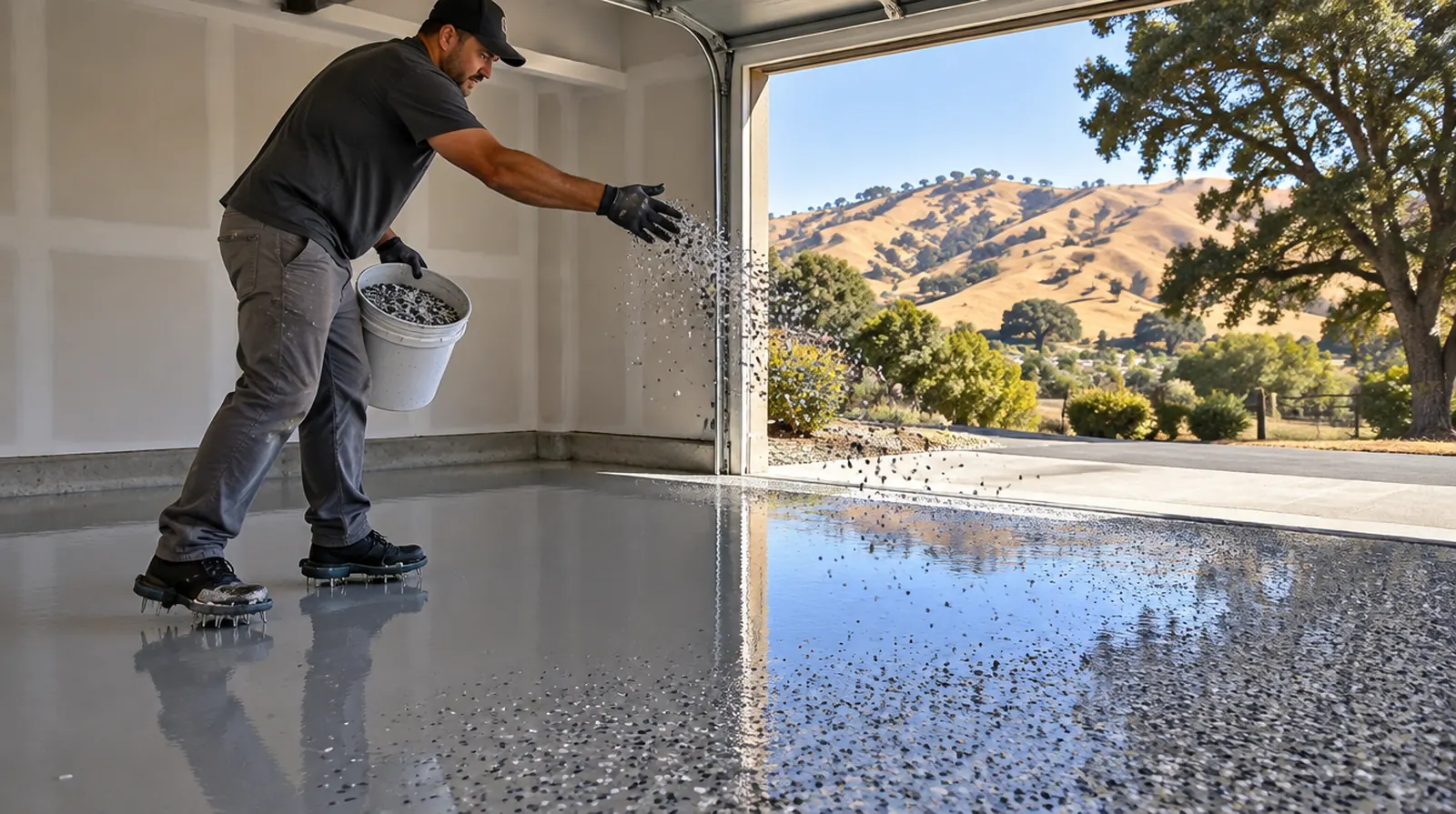
Choosing a blend
Flake comes in dozens of blends and chip sizes. Larger chips give a bold, speckled look. Smaller chips look more like granite from a distance. Around Gilroy the most popular blends are warm tans and browns that match stucco and tile roofs, and medium grays with black and white that suit newer homes. A blend with some light and some dark chips does the best job of hiding both dust and dark tire marks.
We bring a set of real sample boards to your home so you can see them in your own light. A blend that looks warm under a showroom light can look different in a garage that faces west and gets the afternoon sun.
Rooms that suit flake
- Garages, by far the most common.
- Laundry and mud rooms, where water and dirt are part of daily life.
- Covered patios and breezeways, using an outdoor-rated system.
- Shops and barns where you want a floor that forgives a little mess.
- Dog runs and kennel areas, because the sealed surface hoses off.
Epoxy or polyaspartic under the flake?
Both work. An epoxy base with a polyaspartic topcoat is a strong, value-minded choice. A full polyaspartic system cures faster, which means less time out of your garage, and it handles UV better if your garage door is open in the sun most of the day. We explain the price difference on your quote so you can decide.
Cleaning a flake floor
Sweep or blow out the dust when it builds up. For a deeper clean, use a mop or soft deck brush with a mild cleaner and rinse with a hose. Many of our customers simply open the door and hose the floor out toward the driveway. Avoid harsh acid cleaners. A flake floor does not need waxing.
Flake floor questions
Will the chips come loose?
No. The chips are locked in the base coat and sealed under the topcoat.
Can you match my cabinets?
We can get close with a custom blend. Bring a cabinet door or photo to the visit.
Is it cold under bare feet?
It feels like any sealed concrete. Rugs work fine on top once it has cured.
Flake in ranch shops and barns
On properties out toward the hills, a flake floor is a smart choice for a shop or barn that sees muddy boots, tractors and trucks. The texture helps with traction, and the blend hides the dirt that comes in on tires during the rainy months. We use a thicker base coat and larger chips for these floors, and we set the topcoat with more grip.
Pick your flake blend
Call (669) 334-9920 for a free estimate.